17 Cleanroom Production Suites
Each suite features independent positive-pressure HVAC units with HEPA filtration, ensuring strict humidity control (RH < 35%) for hygroscopic powders like BCAAs, collagen, and fruit concentrates.


 cGMP Compliant
 FDA Registered
 Made in USA
 Halal & Kosher Options
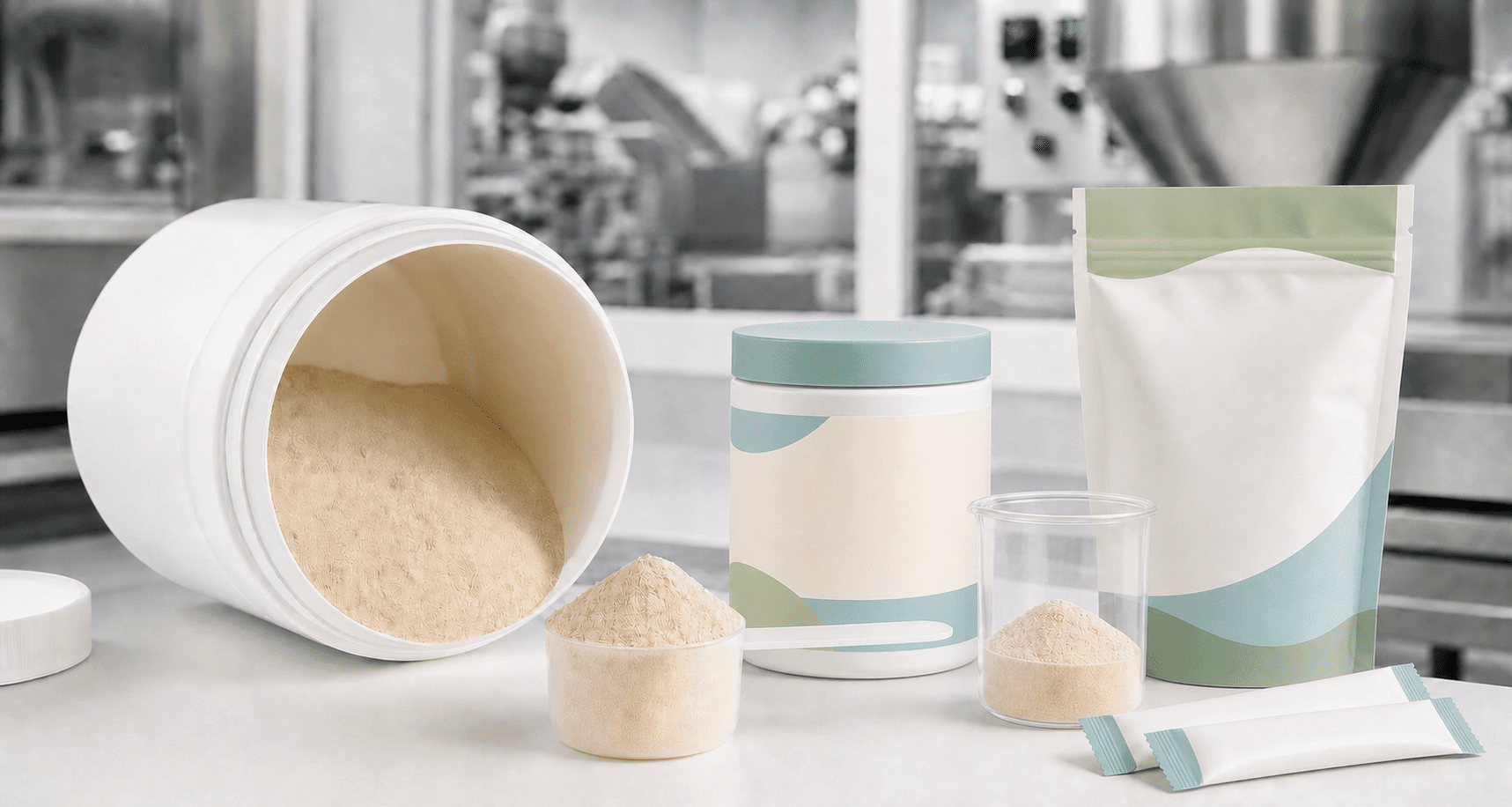
Powder supplement manufacturing demands rigorous environmental controls, particle engineering, and contamination safeguards. Enova Science operates a specialized 70,000 sq. ft. NSF GMP certified facility in Fort Myers, Florida, engineered specifically to eliminate bulk powder cross-contamination and guarantee exact potency.
Each suite features independent positive-pressure HVAC units with HEPA filtration, ensuring strict humidity control (RH < 35%) for hygroscopic powders like BCAAs, collagen, and fruit concentrates.
Utilizing high-shear V-blenders and commercial ribbon blenders, we achieve homogenous powder dispersion even with micro-dosed ingredients (e.g., active vitamin D3 or Chromium at < 0.1% total mass).
Custom mesh size milling (60–200 mesh) and instantization (sunflower lecithin spray drying) transform chalky raw materials into rapidly soluble powders with uniform flowability.
Our quality control lab performs identity confirmation (FTIR), heavy metal analysis (ICP-MS), microbial screening (USP <2021/2022>), and tap density testing for every batch.
Global buyers require formulation versatility that matches shifting retail and e-commerce consumer preferences. Below are our premier turnkey powder categories engineered for maximum potency, solubility, and shelf stability.
Formulation Scope: Grass-fed Whey Isolate (WPI90), Hydrolyzed Whey, Micellar Casein, Organic Pea & Rice Protein, EAAs, and BCAAs.
Key Features: Instantized with lecithin for shaker-free solubility; low-foam processing; natural digestive enzyme additions (Protease, Papain).
Best For: Sports nutrition brands, athletic recovery, and active lifestyle positioning.
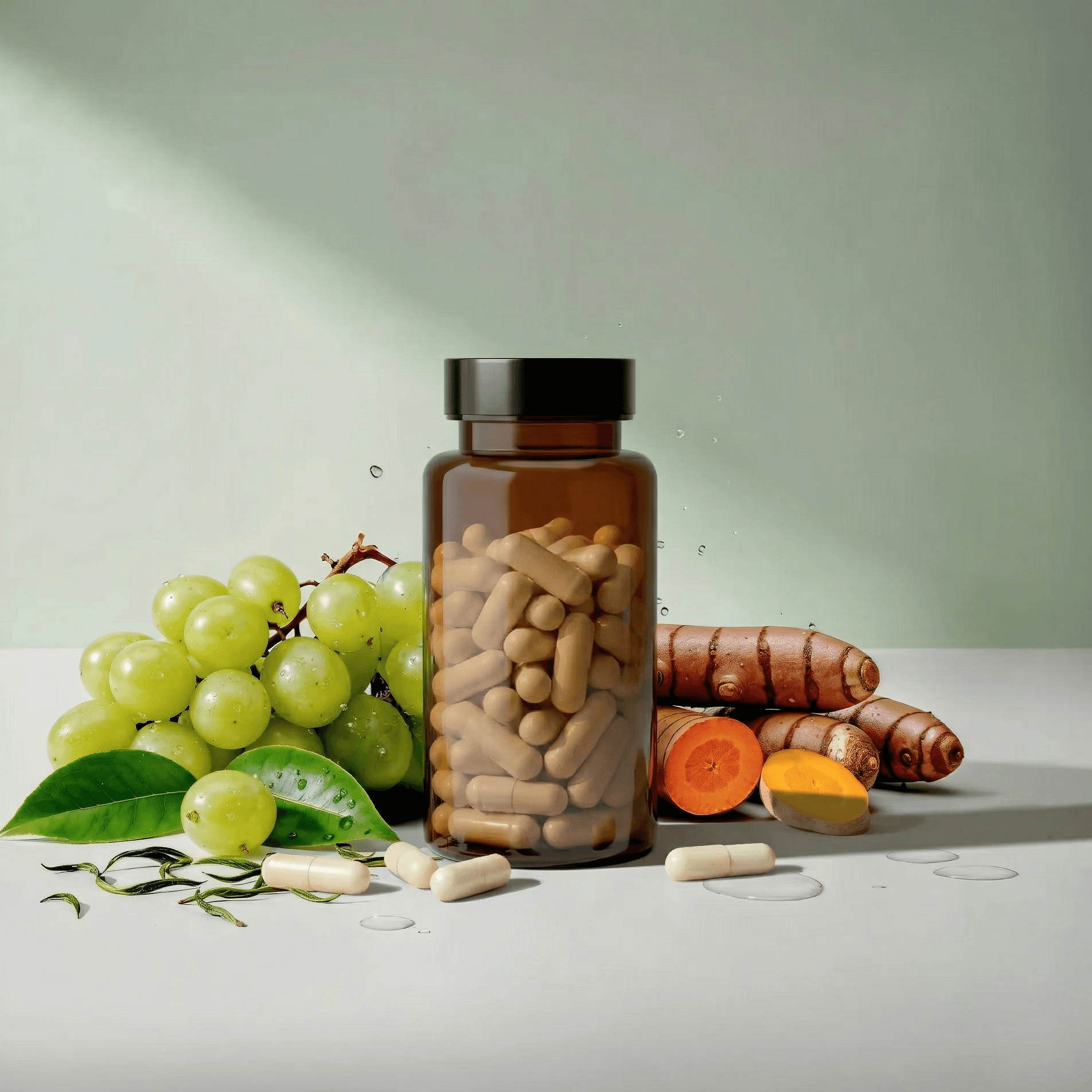
Formulation Scope: Bovine Types I & III Collagen Peptides, Hydrolyzed Marine Collagen, Hyaluronic Acid, Vitamin C, and Biotin complexes.
Key Features: Odorless, neutral-flavor profiles; fully cold-water soluble without gelling; micro-encapsulated active vitamins for thermal stability.
Best For: Beauty-from-within brands, joint support lines, and skin hydration powders.
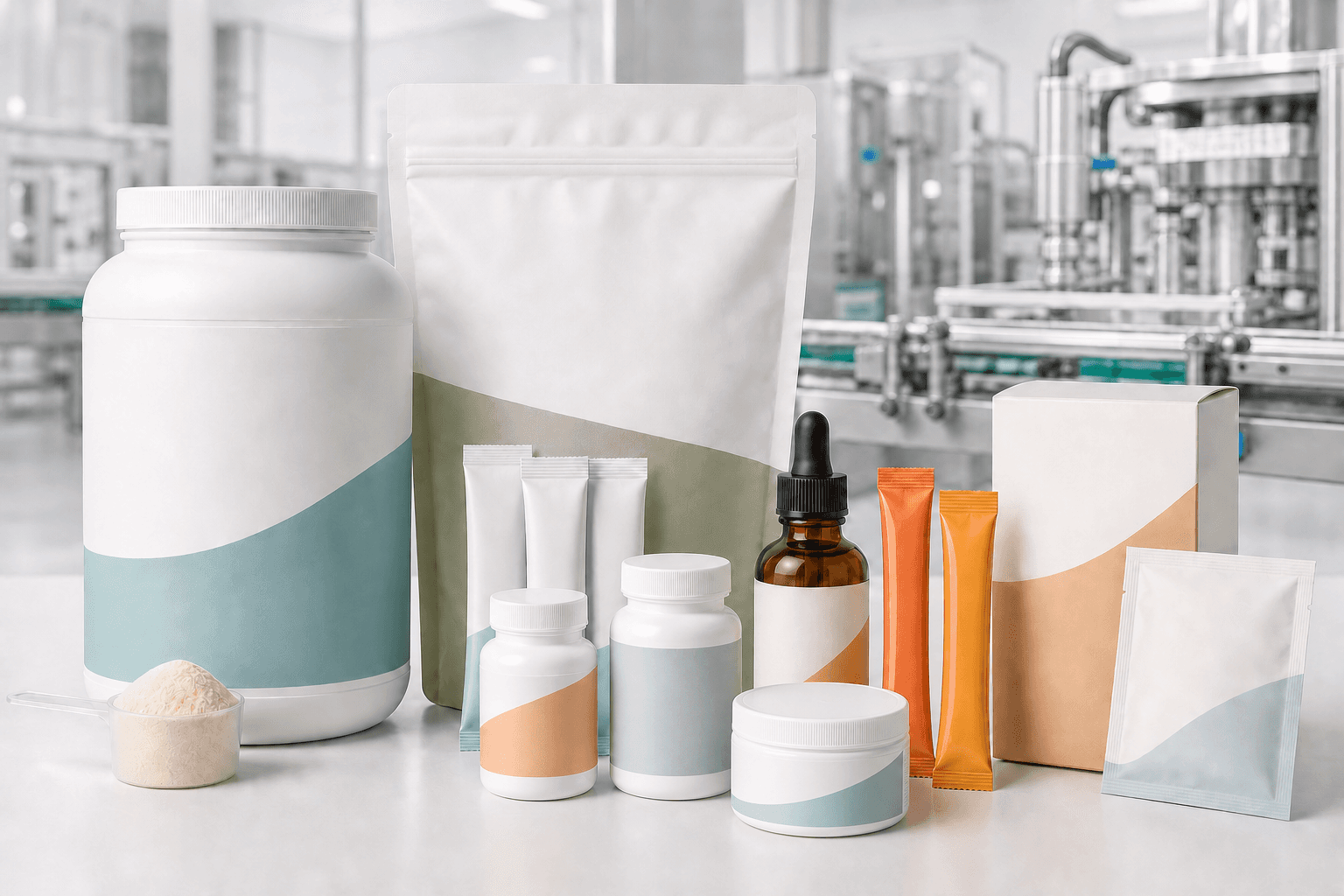
Formulation Scope: Sodium Citrate, Potassium Chloride, Magnesium Glycinate, Coconut Water Powder, L-Theanine, and Alpha-GPC.
Key Features: Zero-sugar formulations with Stevia Reb M or Monk Fruit; fast-dissolving micro-particulates; stick pack high-speed pouching.
Best For: Daily rapid rehydration, endurance sports, and cognitive focus single-serve products.
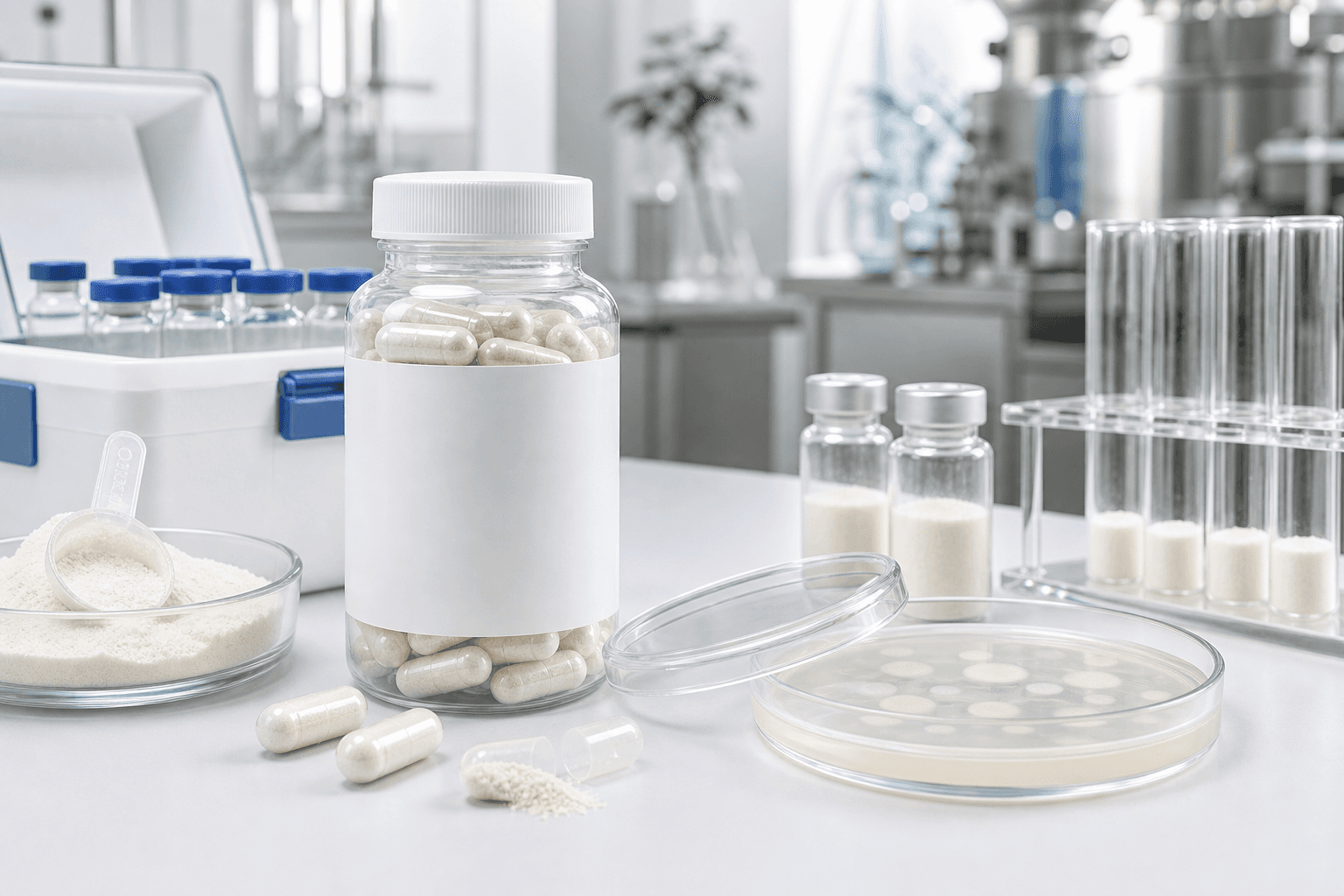
Formulation Scope: Organic Acacia Fiber, Inulin (FOS), Resistant Starch, Spore-Forming Probiotics (Bacillus coagulans), and Postbiotics.
Key Features: Low-FODMAP compliance options; temperature-stable bacterial strains; non-gritty texture profile.
Best For: Gut microbiome balance, digestive wellness, and satiety support products.
Formulation Scope: Wheatgrass Juice, Spirulina, Chlorella, Ashwagandha KSM-66, Organic Mushroom Extracts (Reishi, Lion's Mane).
Key Features: Advanced bitter-masking systems; heavy metal mitigation screening (Prop 65 compliant); natural green chlorophyll stabilization.
Best For: Daily greens powders, immune support, and stress adaptogen blends.
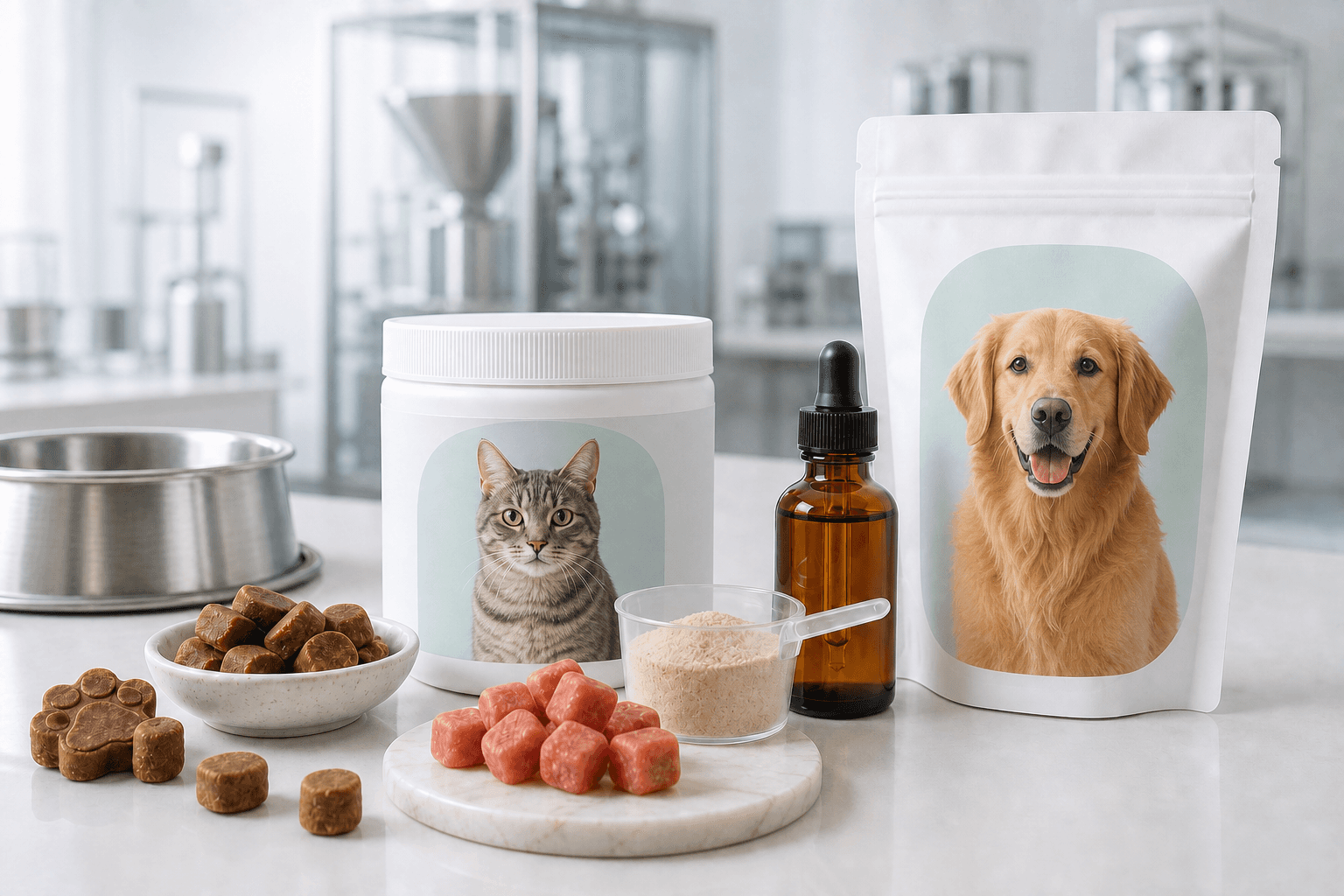
Formulation Scope: Glucosamine HCl, Chondroitin, Salmon Oil Powder, Probiotics, Inactive Brewers Yeast, and Natural Bone Broth.
Key Features: Highly palatable natural liver/beef flavor bases; easy meal-topper dispenser packaging; strict microbiological pathogen controls.
Best For: Veterinary supplements, canine hip & joint formulations, and feline skin/coat powders.
The dietary powder sector is evolving from standard, high-volume commodity protein powders into sophisticated, low-dose functional delivery platforms. Brands that leverage cutting-edge material processing gain significant market advantage.
Traditional botanical powders and hydrophobic amino acids (such as L-Leucine and L-Isoleucine) often clump or float on liquid surfaces. Modern powder supplement contract manufacturing employs fluid-bed agglomeration and liposomal lecithin coating. This process binds microscopic particles into porous granules, allowing water to penetrate immediately and dissolve the powder within seconds without requiring a mechanical blender cup.
Consumer expectations for clean-label, plant-based powders require eliminating artificial sweeteners like Sucralose and Acesulfame Potassium. Enova Science's R&D team utilizes advanced natural flavor matrices, combining high-purity Stevia Reb M, Thaumatin (sweet protein), and natural organic aroma modulators. This effectively neutralizes the earthiness of greens, the metallic taste of minerals, and the bitterness of botanical polyphenols.
Exposure to moisture, oxygen, and light rapidly degrades sensitive powder actives such as Probiotics, Vitamin C, and Omega-3 oil powders. By applying micro-encapsulated protective lipid shells, active ingredients remain inert during blending and storage, guaranteeing 100% label potency through the end of product shelf life without requiring excessive ingredient overages.
Global buyers are phasing out traditional anti-caking agents like Silicon Dioxide and Magnesium Stearate due to consumer preference and European regulatory scrutiny. Enova Science utilizes clean-label alternatives, including organic rice hulls, tapioca maltodextrin, and organic sunflower lecithin, ensuring seamless powder flow on automated filling lines while maintaining a 100% clean ingredient label.
Navigating global supply chain volatility, shifting international tariffs, and strict regulatory standards requires brand owners to adopt proactive procurement strategies. Here is how leading global buyers are structuring their contract manufacturing relationships.
While multi-serve plastic tubs remain popular, market demand is shifting rapidly toward stick packs, sachets, and travel pouches. Single-serve formats reduce oxidation, eliminate scoop hygiene concerns, and lower international shipping weight by up to 40% per serving compared to rigid HDPE tubs.
Retail platforms (including Amazon Seller Central) and regulatory bodies (such as California Proposition 65 and EU EFSA) have tightened limits on Lead, Cadmium, Arsenic, and Mercury in plant powders. Procurement teams now require raw material testing prior to blending and final CoA verification by ISO 17025 accredited labs.
Brands are diversifying ingredient origin to mitigate geopolitical risks. Contract manufacturers must offer fully traceable, non-GMO, and origin-verified raw materials (such as European collagen peptides or USA-harvested organic greens) with complete chain-of-custody documentation.
Take a virtual walk through our Fort Myers, Florida manufacturing plant. See how raw powder materials pass through identity verification, precision blending, cleanroom pouch filling, and automated packaging.
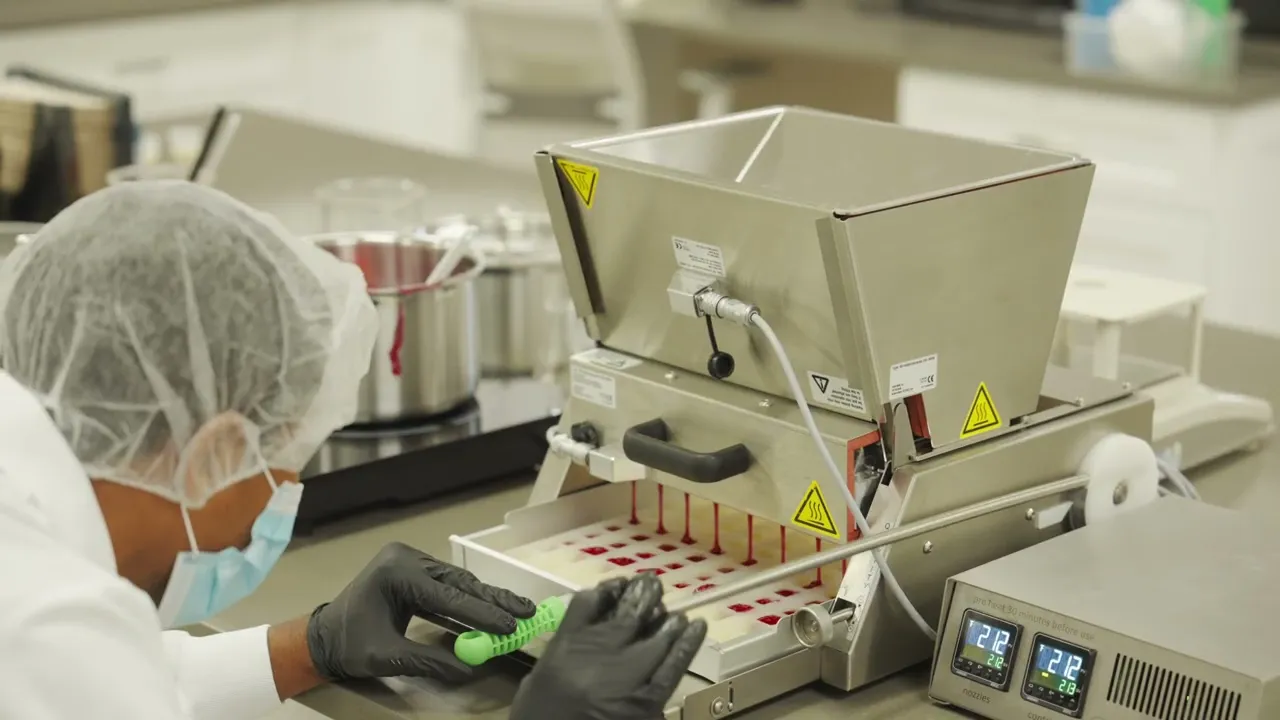
Automated powder sachet pouching and bulk container filling line in operation
Every powder production run executed at Enova Science undergoes rigorous testing in accordance with 21 CFR Part 111 regulations. Below is our standard quality control testing workflow and documentation package.
| Manufacturing Phase | Analytical Controls & Testing Executed | Documentation Delivered to Buyer |
|---|---|---|
| 1. Raw Material Intake | FTIR identity testing; moisture content (% LOD); particle mesh size verification; heavy metal (ICP-MS) & microbiological screening. | Raw material Certificate of Analysis, Supplier Qualification Records & Allergen Declarations. |
| 2. In-Process Blending | Blend uniformity sampling (top, middle, bottom core samples); tap density testing (Carr's Index & Hausner Ratio); weight variation checks. | Executed Master Batch Record (MBR) and In-Process Inspection Sheets. |
| 3. Container / Sachet Packaging | Nitrogen flushing verification (residual $O_2 < 2\%$); heat seal integrity testing; metal detection (< 1.5mm ferrous/non-ferrous); net weight monitoring. | Packaging Quality Audit Log, Seal Integrity Report & Lot/Expiry Coding Proof. |
| 4. Finished Product Release | Active ingredient HPLC assay potency; total aerobic microbial count (TAMC); yeast & mold (TYMC); Salmonella & E. coli testing. | Finished Product Certificate of Analysis (CoA), Certificate of Free Sale & GMP Compliance Certificate. |
Answers to key technical, logistical, and compliance questions asked by global procurement directors and supplement brand owners.
Hygroscopic ingredients (such as branched-chain amino acids, natural fruit powders, and choline compounds) absorb ambient atmospheric moisture rapidly, leading to clumping, caking, and active ingredient degradation. At Enova Science, we process hygroscopic powders inside dedicated cleanroom suites maintained at strictly controlled relative humidity levels below 35% RH. Furthermore, we optimize the particle size through agglomeration, incorporate clean-label anti-caking agents like organic rice concentrates, and utilize moisture-barrier packaging formats such as multi-layer aluminum stick packs or induction-sealed HDPE tubs with desiccant canisters.
Particle size directly dictates solubility, mouthfeel, and suspension stability. For protein powders (whey, collagen, plant protein), an optimal particle size typically ranges from 80 to 120 mesh. This allows rapid dispersion without creating excessive dust during consumer pouring. For botanical green powders and mushroom extracts, we mill raw materials down to 140 to 200 mesh to eliminate gritty textures. When necessary, hydrophobic ingredients undergo fluid-bed instantization with non-GMO sunflower lecithin to ensure they dissolve smoothly in cold water without aggressive shaking.
Our standard MOQ for custom powder supplement manufacturing starts at 1,000 lbs (approx. 450 kg) for bulk powder production. For finished, consumer-ready packaging: rigid plastic tubs (e.g., 30-serving or 60-serving containers) typically start at 3,000 to 5,000 units per SKU; single-serve stick packs and sachets carry a standard MOQ of 30,000 to 50,000 total sticks due to automated high-speed packaging equipment setup parameters. Price-per-unit tiers improve significantly at 10,000 tubs or 100,000 stick pack volume thresholds.
Powder supplements—especially those containing natural agricultural products like greens, berry juices, and herbal extracts—are subject to natural raw material variations. To guarantee batch-to-batch uniformity, Enova Science enforces strict raw material intake specifications, including spectrophotometric color analysis, moisture content testing (% LOD), and tap density testing (measuring bulk density in g/mL). Our formulation team establishes precise flavor target profiles and uses validated Master Blending Records to control mixing speeds and times, preventing ingredient segregation during packaging.
We supply a turnkey regulatory documentation package required for marketplace listing and international export. This includes a comprehensive finished product Certificate of Analysis (CoA) from an ISO 17025 accredited laboratory detailing potency assays, heavy metals (Lead, Cadmium, Arsenic, Mercury), microbial counts, and pesticide screening. Additionally, we issue NSF GMP facility certificates, Certificates of Free Sale, allergen statements, master manufacturing flowcharts, and 21 CFR 111 compliance declarations.
Standard real-time stability testing is conducted over a 24-month or 36-month duration under ambient conditions ($25^\circ\text{C} / 60\%\text{ RH}$). For accelerated product launches, we perform 6-month accelerated stability testing inside environmental chambers ($40^\circ\text{C} / 75\%\text{ RH}$), which mathematically correlates to a 24-month shelf life under FDA dietary supplement guidelines. Stability samples are pulled at 0, 3, and 6 months to analyze active ingredient retention, organoleptic changes, and moisture accumulation.
We provide comprehensive packaging solutions tailored to your brand strategy: wide-mouth HDPE and PET plastic tubs (8 oz to 5 lbs) with custom color induction seals and scoops; flexible stand-up re-sealable pouches (gusseted bags); single-serve foil stick packs (1g to 15g fill weight); cardboard retail cartons; and bulk super-sacks (25 kg to 500 kg drums) for commercial intermediate processing.
Initial quotation and feasibility reviews are completed within 48 business hours. R&D pilot flavor samples are typically delivered in 5 to 7 working days. Once your final powder formulation, packaging artwork, and component specifications are approved, standard turnkey contract manufacturing takes approximately 6 to 8 weeks, depending on raw material sourcing and packaging component availability. Re-orders are processed on an expedited 4 to 6 week schedule.
Partner with an NSF GMP certified U.S. contract manufacturer. Send us your custom powder formula brief, target active specs, and volume expectations for an immediate technical evaluation and quote.