Featured Industrial Toll Manufacturing Solutions
Direct manufacturer capabilities across precision engineering, high-speed automated lines, chemical toll blending, and intelligent mobility hardware.
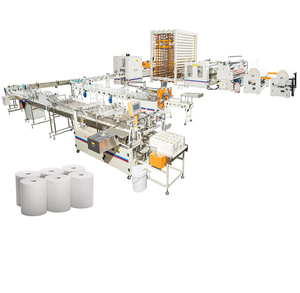
Fully Automatic Stable Performance Toilet Toll Tissue Paper Production Line
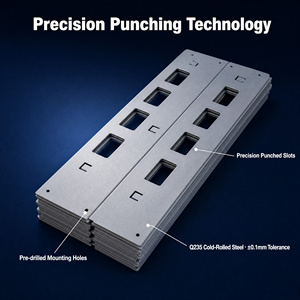
Toll Processing Laser Cutting Service Customer Supplied Material OEM Q235 Steel
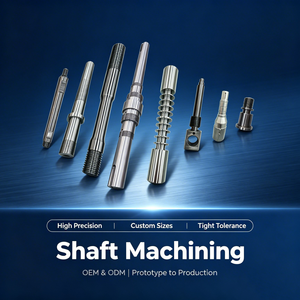
Custom Precision CNC Turning Shaft Stainless Steel Axle Parts Mass Production
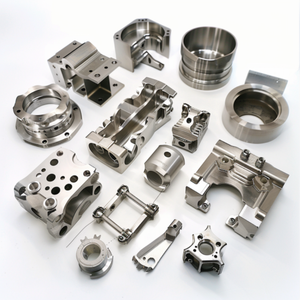
HYM OEM ODM Custom CNC Lathe Precision Spare Parts Turning & Milling Service
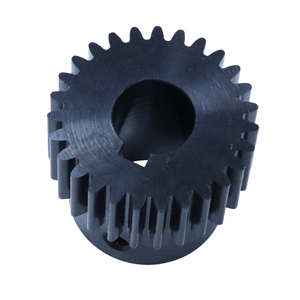
CNC Turning Parts Custom Precision Metal Lathe Machining Service
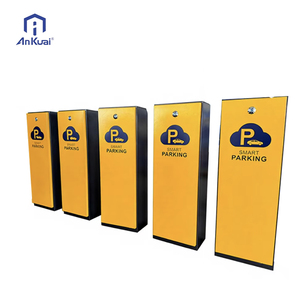
Higher Quality LPR Automatic License Plate Recognition Toll Gate Barrier System
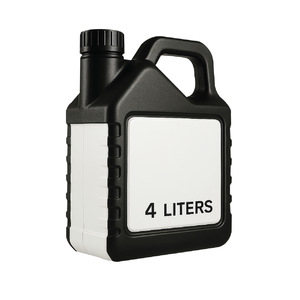
Private Label Engine Oil Manufacturer | OEM/Toll Blending 5W40 Lubricant
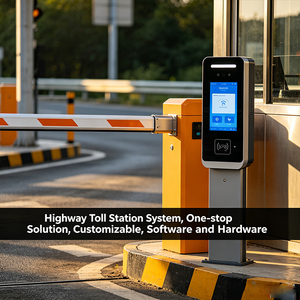
Highway Toll Plaza Electronic Toll Collection System ANPR RFID Hardware Software
Enterprise Infrastructure & Quality Control Standards
Combining world-class manufacturing footprints with strict regulatory compliance to insulate global supply chains from operational vulnerability.
70,000 Sq. Ft. Advanced Plant
Equipped with 17 segregated, atmosphere-controlled processing suites designed specifically to prevent cross-contamination across complex chemical, botanical, and high-precision mechanical runs.
NSF GMP & FDA Registered
Operates under rigorous cGMP protocols. Full batch records, Certificate of Analysis (CoA) generation, identity testing, and retained sample vaulting are standard for every production lot.
Global Engineering Support
Rapid engineering evaluation with detailed quotation delivered within 48 hours, R&D pilot trial samples ready in 5 working days, and full-scale production throughput within 8 weeks.
Navigating Global Toll Manufacturing: An Executive Sourcing White Paper
In modern industrial manufacturing, the strategic division between contract manufacturing and toll manufacturing has become a critical operational lever for Fortune 500 enterprises and scaling OEMs alike. Toll manufacturing—the process wherein a client company provides raw materials or semi-finished components to a specialized third-party processor who performs specific processing tasks—offers unprecedented financial flexibility, IP isolation, and capital expenditure (CapEx) reduction.
Core Economic Advantage of Toll Processing
By leveraging established third-party toll facilities, asset-light enterprises eliminate millions in capital costs for high-precision machinery, dedicated cleanrooms, and environmental permits, turning fixed infrastructure liabilities into scalable, variable operating expenses (OpEx).
Toll Manufacturing vs. Contract Manufacturing: Strategic Comparison
Selecting the optimal operational model requires a granular understanding of material ownership, quality liability, and supply chain control mechanisms. The matrix below outlines the fundamental differences governing these business models:
| Evaluation Dimension | Toll Manufacturing (Toll Processing) | Contract Manufacturing (Turnkey OEM) |
|---|---|---|
| Raw Material Sourcing | Client provides 100% of raw inputs/components | Manufacturer sources raw materials per specification |
| IP & Recipe Protection | Maximum: Proprietary formulation remains isolated | Moderate: Supplier has visibility over total BOM cost |
| Working Capital Impact | High raw inventory hold; Zero capital machinery spend | Lower inventory hold; Unit cost includes supplier margin on materials |
| Quality Control (QC) Gate | Joint: Client validates raw; Toll facility validates process | Manufacturer owns end-to-end incoming/outgoing QC |
| Scrap/Yield Responsibility | Defined target scrap allowance (typically 1.0–2.5%) | Manufacturer absorbs scrap cost into unit pricing |
Technical Due Diligence: Evaluating High-Performing Toll Exporters
When selecting a toll manufacturing partner across global export hubs, procurement executives must conduct strict auditing across four key pillars of operational capability:
- Atmospheric & Environmental Containment: High-purity toll processing (such as fine chemical blending, lubricant formulation, or precision hardware machining) requires isolated processing suites. Facilities utilizing positive/negative pressure differential HVAC systems prevent cross-contamination during multi-grade production runs.
- Metrology & Advanced Quality Verification: Top-tier tolling partners utilize integrated Coordinate Measuring Machines (CMM), optical emission spectrometers, and real-time vision inspection systems (such as high-speed ANPR cameras for intelligent gate hardware) directly on the manufacturing line.
- Scalability and Batch Flexibility: Leading exporters maintain parallel production lines capable of switching from pilot-scale test batches (e.g., 500 kg chemical blends or 50-piece prototype machining) to continuous high-volume outputs without requiring tooling reconfiguration.
- Traceability and Regulatory Documentation: Every export-bound batch must be backed by transparent traceability. This includes complete executed batch records (EBR), material safety data sheets (MSDS), certificates of analysis (CoA), and full compliance with international standards such as REACH, RoHS, ISO 9001, and cGMP.
Future Sourcing & Technical Trends (2026–2030)
Key technological disruptions and strategic procurement realignments transforming global contract manufacturing and toll services.
IoT-Enabled Process Monitoring
Modern toll facilities are integrating industrial IoT sensors into CNC spindle heads, laser cutting beds, and liquid mixing vessels. Real-time telemetry allows clients to monitor batch viscosities, laser kerf tolerances, and feed rates remotely with absolute transparency.
Dual-Sourcing & Nearshoring Realignment
To hedge against geopolitical friction and freight volatility, enterprise buyers are establishing "Toll+1" procurement models. This strategy pairs high-volume primary toll exporters with regional specialized processors to ensure uninterrupted raw material throughput.
Zero-Waste Closed-Loop Tolling
Environmental regulatory pressure is driving demand for sustainable toll processing. Top exporters now offer closed-loop material reclamation—recycling metal swarf from CNC turning, capturing fiber laser scrap, and re-refining chemical wash solvents on site.
Frequently Asked Questions in Toll Manufacturing
Detailed technical and commercial answers to clear your sourcing hurdles and streamline vendor onboarding.
What is the standard yield scrap rate allowance in toll manufacturing agreements?
Standard toll processing contracts establish an agreed baseline scrap allowance ranging between 1.0% and 3.0%, depending on process complexity (e.g., precision CNC machining vs. continuous liquid toll blending). Any raw material loss below the threshold is retained as process efficiency, while losses exceeding the allowance are typically credited back to the customer by the toll processor.
How do toll manufacturers safeguard proprietary client Intellectual Property (IP)?
Leading exporters enforce strict non-disclosure agreements (NDAs), isolated processing rooms (such as our 17 independent suites), localized data network access for CNC tool paths, and blind formulation codes during chemical blending. Material formulations are identified by internal batch IDs so shop-floor operators never handle named commercial recipes.
Can we supply our own specialized tooling or raw material stock for custom jobs?
Yes. In a pure toll manufacturing arrangement, customers retain full freedom to provide raw metal sheets (e.g., Q235 steel for laser cutting), specialized CNC lathe tooling, custom synthetic oil additives, or proprietary packaging materials. Our facility conducts incoming material verification prior to scheduling production.
What certifications should a global toll manufacturing exporter possess?
Depending on the product segment, your tolling partner should hold ISO 9001:2015 for general engineering and quality management, NSF GMP registration and FDA facility registration for chemical/nutraceutical processing, and CE / FCC certifications for electronic hardware such as ANPR toll plaza systems.
How are quality disputes and off-spec batches resolved in toll manufacturing?
Quality parameters are locked down in a pre-production Quality Agreement (QA). Retained samples are kept for every executed batch. If an off-spec issue arises, joint laboratory testing of retained samples against baseline incoming raw material CoAs isolates whether the defect stemmed from raw material variability or processing non-conformance.
What is the typical timeline from RFQ to mass toll production?
Our baseline timeline includes engineering review and formal quotation within 48 hours, pilot sample creation and tolerance verification within 5 working days, and full turnkey commercial run scheduling within 8 weeks following client sample sign-off.
Accelerate Your Toll Manufacturing Strategy
Partner with a certified exporter featuring 70,000 sq. ft. of advanced cleanroom and machining space, 17 segregated production suites, and rapid engineering turnaround.