Featured Custom OEM Formulations & Botanical Powders
Engineered with active marker quantification, superior batch-to-batch consistency, and compliant with USP/EP heavy metal and pesticide safety standards.
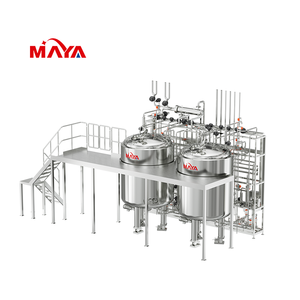
Marya China Manufacturer Customized Fully Automated Formulation System
Get a Quote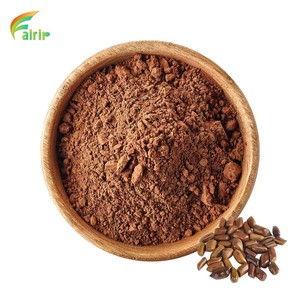
OEM ODM Custom Formulation Cassia Seed Extract 10 to 1 Food Grade Botanical Powder Bulk Supply
Get a Quote
OEM Service Private Label Bulk Wholesale Custom Formulation Creatine Monohydrate Powder Sports Nutrition Supplements
Get a Quote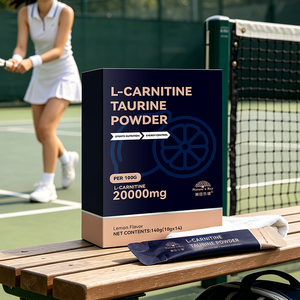
Private Label L-Carnitine Taurine Energy Powder Polydextrose Grapefruit Custom Formulation
Get a Quote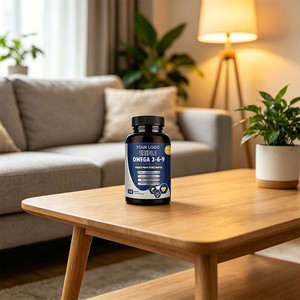
OEM Custom Formulation Cardiovascular Health Support Supplements Triple Omega 369 Softgel Capsules EPA DHA
Get a Quote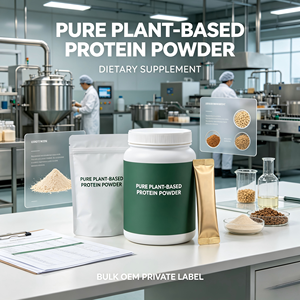
Private Label Plant-Based Protein Powder Custom Formulation Bulk Supply ODM OEM Dietary Supplement Powder
Get a Quote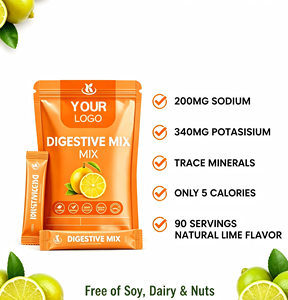
Custom Formulation Electrolyte Powder Private Label Adult Heart Healthy Hydration Supplement Low Carb GMP Certified
Get a Quote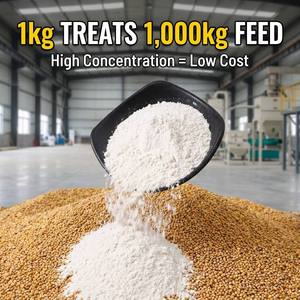
Custom Formulation Service Mineral Premix for Multi-Species Animal Nutrition Feed Additive Trace Minerals Bulk Supply
Get a Quote1. Executive Industry Whitepaper: The Technical Blueprint for OEM Botanical Extract Sourcing
In the global nutraceutical, functional food, and phytopharmaceutical sectors, selecting a Custom OEM Botanical Extracts Supplier & Manufacturer is no longer a mere transaction of bulk raw powders. It is a high-stakes strategic integration that dictates product efficacy, regulatory approval, shelf-life stability, and brand enterprise value. As consumer demand transitions toward scientifically validated bio-active markers and clean-label verification, the manufacturing paradigm has evolved from rudimentary solvent extractions to high-precision, automated standardized processing.
Phytochemical extraction requires a sophisticated balance between molecular integrity and commercial yield. Plants synthesize complex secondary metabolites—including polyphenols, alkaloids, flavonoids, saponins, and terpenoids—that are sensitive to thermal degradation, oxidative stress, and pH fluctuations. Leading global suppliers must deploy advanced processing platforms, such as continuous countercurrent extraction, supercritical carbon dioxide ($CO_2$) extraction, and high-pressure membrane separation, to preserve the biological profile of natural botanical matrices.
Information Gain Insight: Modern botanical B2B procurement focuses heavily on chromatographic standardization (HPLC/GC-MS quantification of marker compounds) rather than simple extraction ratios (e.g., 10:1 or 20:1). True therapeutic and nutritional value resides in verified bio-active molecule percentages.
Furthermore, fully automated formulation systems—such as our integrated cleanroom blending and liquid/powder dosing networks—guarantee that active phytochemicals remain uniformly dispersed throughout final finished dosage forms, whether delivered in hard-shell capsules, chewable pectin gummies, functional stick packs, or micro-encapsulated bulk premixes.
2. Future Procurement Trends in Global Botanical Supply Chains (2025–2030 Outlook)
The botanical extract ecosystem is undergoing a seismic shift driven by strict regulatory monitoring (FDA 21 CFR Part 111, EU Food Safety Authority regulations), changing climate patterns affecting crop yields, and elevated consumer scrutiny regarding transparency. Procurement directors and product development teams must align with suppliers capable of anticipating these macro trends:
DNA Barcoding & Species Verification
Traditional TLC methods are being superseded by genomic DNA testing. Brands now demand verification that botanical extracts are free from species adulteration, cross-contamination, or unlisted filler plants.
Green Solvent & Zero-Residue Extraction
Regulatory authorities are progressively restricting Class 1 and Class 2 organic solvents. Future procurement mandates water-based enzymatic extractions, ethanol refluxing, or solventless $CO_2$ fractionation.
Nano-Encapsulation & Bioavailability
Raw phytochemicals often suffer from poor aqueous solubility and low gastrointestinal absorption. Liposomal delivery and spray-dried micro-encapsulation represent the dominant procurement growth sector.
As global supply chains navigate carbon footprint mandates, full agricultural traceability—from farm soil testing to automated industrial drying—has become a core qualification metric. OEMs that maintain integrated supply agreements directly with GAP (Good Agricultural Practices) certified farming cooperatives provide an irreplaceable hedge against raw material price volatility and supply disruptions.
3. Next-Generation Processing Technologies: From Biomass to Standardized Extract
Transforming crude botanical biomass into high-purity, standardized active ingredients requires an array of advanced physical and chemical engineering methodologies. Our contract manufacturing infrastructure utilizes automated closed-loop systems to safeguard volatile active constituents while eliminating environmental contaminants.
A. Supercritical Fluid Extraction (SFE-CO2)
Supercritical carbon dioxide operates at temperatures and pressures above its critical point ($31.1^\circ\text{C}$ and $73.9\text{ bar}$), exhibiting liquid-like solvent density alongside gas-like diffusivity. This technology is ideal for lipophilic botanicals, essential oils, and herbal lipids (such as Saw Palmetto or Phytosterols). Because $CO_2$ reverts to gas upon depressurization, the resulting extract is completely solvent-free, non-thermalized, and chemically pure.
B. Dynamic Countercurrent Extraction (DCCE)
For water-soluble and hydro-alcoholic extractions, DCCE technology moves raw plant biomass and extraction solvents in opposite directions within a continuous processing tube. This maintains a maximum concentration gradient throughout the extraction cycle, boosting active compound yield by 15-25% over conventional static maceration while reducing thermal exposure times by over 60%.
C. Spray Drying and Microencapsulation
Liquid concentrated extracts are atomized inside high-velocity sanitary spray dryers equipped with HEPA-filtered air intake streams. By coating active extracts with carrier matrices (such as organic acacia gum, maltodextrin, or tapioca starch), sensitive compounds like anthocyanins, polyphenols, and probiotics are protected against heat, moisture, and stomach acid oxidation.
4. Standardization Matrix & Quality Control Benchmark
Evaluating raw botanical suppliers requires rigorous technical comparison against established compendial standards. The table below outlines our standard OEM analytical testing framework compared to industry baseline commodities:
| Quality / Analytical Parameter | Standard Commercial Supplier | Enova Science Premium OEM Extraction | Analytical Method / Instrumentation |
|---|---|---|---|
| Active Marker Quantification | Generic Ratios (10:1, 20:1) | ✓ Standardized % Actives | High-Performance Liquid Chromatography (HPLC) |
| Heavy Metal Residues (Pb, Cd, As, Hg) | < 10.0 ppm Total | ✓ < 1.0 ppm Strict Limit | ICP-MS (Inductively Coupled Plasma Mass Spectrometry) |
| Pesticide Residue Screen | Basic Organochlorine Test | ✓ 400+ Multi-Residue Screen | LC-MS/MS & GC-MS/MS System |
| Microbial Safety Limits | < 10,000 CFU/g TAMC | ✓ < 1,000 CFU/g Cleanroom Standard | USP <2021> / <2022> Microbial Enumeration |
| Solvent Residue Limits | USP Class 2 Compliant | ✓ Zero Residual Organic Solvents | Headspace Gas Chromatography (HS-GC) |
| Batch-to-Batch Color Consistency | Variable Color & Mesh Sizing | ✓ Spectrophotometric Standardization | CIELAB Color Scale & Malvern Particle Sizing |
5. Enterprise Manufacturing Infrastructure: The Enova Science & Marya Synergy
Our state-of-the-art 70,000 sq. ft. contract manufacturing complex in Fort Myers, Florida, combined with world-class engineering partnerships (including Marya fully automated formulation systems), represents an elite, vertically integrated manufacturing hub. We provide international brand owners, dietary supplement marketers, and pharmaceutical distributors with an ironclad North American manufacturing base backed by global engineering excellence.
NSF GMP Registered & FDA Registered
Our facilities operate strictly under 21 CFR Part 111 (Dietary Supplements) and 21 CFR Part 211 (cGMP). Comprehensive batch manufacturing records (BMR) accompany every production run.
17 Cleanroom Isolation Suites
To completely eliminate airborne cross-contamination between botanical extracts, probiotic strains, sports nutrition powders, and allergen ingredients, our plant features 17 independent negative/positive air-pressure cleanrooms.
Fully Automated Dosing & Encapsulation
Leveraging Marya high-speed automated formulation equipment, our high-capacity encapsulation lines produce hard-shell gelatin/HPMC capsules (sizes 000 to 3), tablets, liquid tinctures, and stick packs with weight tolerances within ±0.8%.
By keeping R&D pilot formulation, analytical testing, blending, encapsulation, and primary packaging under one roof, we eliminate intermediate transport risks, shorten total turnkey production lead times to approximately 8 weeks, and deliver market-ready products with full regulatory dossier support for Amazon, retail, and global customs clearances.
6. B2B Technical Procurement FAQ: Botanical Extracts & Contract Manufacturing
Clear, authoritative answers to essential regulatory, technical, and logistical inquiries encounter by procurement officers, chemists, and supply chain managers.
Accelerate Your Next Botanical Product Development Cycle
Partner with an NSF GMP-certified North American contract manufacturer equipped with automated formulation systems, full chromatographic testing labs, and scalable production capacity.
Get a Quote