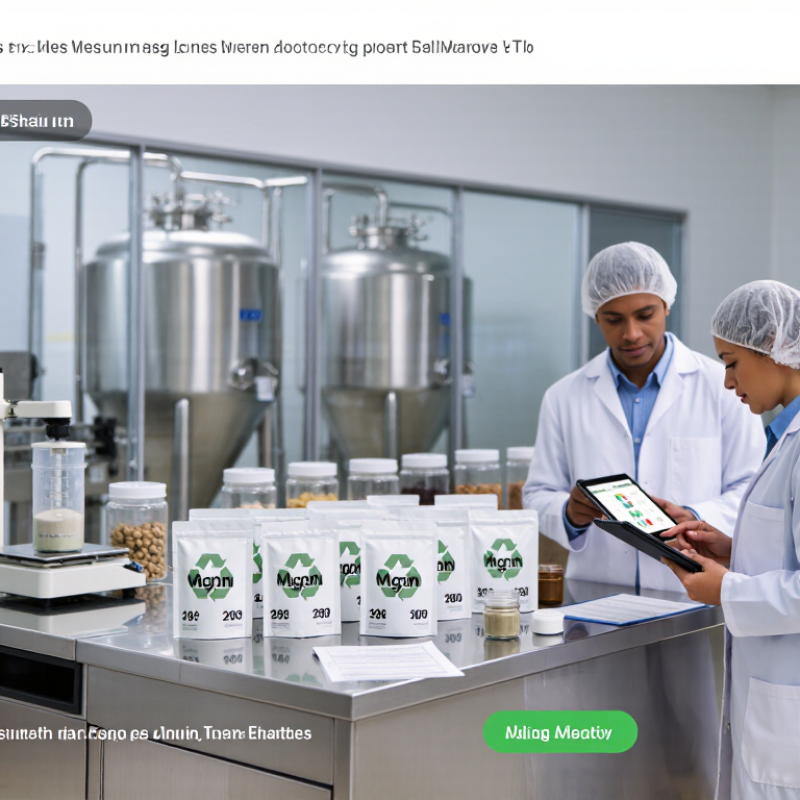
Private Label Nutraceuticals can help a brand enter the wellness market with greater speed and control. Instead of building a factory, companies can work with experienced manufacturers to develop supplements under their own names. The process may include ingredient selection, flavor testing, packaging design, stability checks, and production planning. Imagine a new magnesium powder arriving in a recyclable pouch, with a clear lot number and a certificate of analysis ready for review.
However, private label is not effortless. A polished label cannot replace scientific evidence or careful quality control. Daniel Fabricant, Ph.D., a former FDA official and former Natural Products Association executive, has stated, “You can’t test quality into a product. Quality has to be built into the product.” This principle matters throughout the supply chain. Responsible brands should assess supplier qualifications, verify raw-material identity, review contaminant testing, and confirm compliance with applicable manufacturing standards. They should also examine whether marketing claims are accurate, understandable, and properly supported.
Trust takes time.
Private Label Nutraceuticals may offer practical advantages, but the strongest results come from thoughtful collaboration. A reliable manufacturer should communicate clearly about sourcing, batch records, testing methods, minimum order quantities, and product timelines. These details can feel unglamorous. They often decide whether a product earns repeat purchases. Even experienced teams can overlook a small issue, such as an unclear serving instruction or an unsuitable package seal. That is why brand owners should keep asking questions, documenting decisions, and improving the process before launch.
Market Demand: NHANES Found 58.5% of U.S. Adults Used Supplements
NHANES reported that 58.5% of U.S. adults used dietary supplements during 2017–2018. The finding came from a nationally representative survey analyzed in JAMA Network Open. It shows a substantial, measurable audience for nutraceutical products, not merely online interest. Shelves, kitchen cabinets, and daily routines reflect this demand.
The opportunity is practical. Private label nutraceuticals can help a company develop focused products for common needs, such as vitamin support, protein intake, or healthy aging. The Council for Responsible Nutrition’s 2023 Consumer Survey reported that 74% of U.S. adults use dietary supplements. However, these figures use different timeframes and definitions. They should guide planning, not guarantee revenue. That distinction matters.
A credible private label program needs more than attractive packaging. Suppliers should provide identity testing, contaminant screening, stability data, and certificates of analysis. Clear ingredient amounts help consumers compare products without confusion. Claims also require careful review under applicable regulations. The U.S. National Institutes of Health Office of Dietary Supplements emphasizes evidence-based consumer information, yet evidence quality varies across ingredients. Some formulas look impressive but remain poorly studied. That is an uncomfortable point. It deserves attention before launch.
Experience also exposes a common weakness: brands often study demand, then neglect repeat-use behavior. A convenient serving size, readable directions, and consistent quality may matter more than a crowded formula. Private label gives companies control over these details, but control creates responsibility.
Private Label Scale: U.S. Store Brands Generated $236.3B in 2023
Why Choose Private Label Nutraceuticals for Your Brand?
Private Label Scale: U.S. Store Brands Generated $236.3B in 2023
Private label is no longer a budget-only decision. PLMA, using Circana data, reported that U.S. store-brand sales reached $236.3 billion in 2023. That represented 4.7% growth from the previous year. Consumers are clearly willing to trust products made for retailers, especially when quality, price, and availability feel balanced.
The opportunity is significant.
For nutraceutical brands, private label can shorten development timelines and reduce early manufacturing complexity. A qualified partner may provide formulation support, batch testing, stability documentation, and packaging coordination. Still, a ready-made formula is not automatically a reliable product. Brands should review certificates of analysis, ingredient identity testing, allergen controls, and supplier qualifications. U.S. dietary supplement manufacturers must also follow current good manufacturing practices under 21 CFR Part 111.
The uncomfortable truth is that the $236.3 billion figure does not guarantee success. Store-brand growth reflects broad retail performance, not every supplement launch. A low-cost bottle can fail when the label is confusing, the dosage feels weak, or quality evidence is difficult to access. I would treat private label as a controlled learning process, not a shortcut. Small pilot batches, realistic claims, and customer feedback can expose weaknesses before larger production begins. Some formulas may need revision. That is normal.
Cost Structure: Compare MOQ, COGS, Lead Times, and Margin Potential
Private label nutraceuticals can improve cost control, but the savings depend on volume and specification. A practical starting MOQ is often 1,000 to 5,000 units, depending on format, packaging, and testing needs. Lower MOQs reduce inventory risk, yet they usually increase unit COGS. Larger runs can spread tooling, testing, and setup costs across more units. That trade-off is easy to underestimate.
Lead times also affect cash flow. Stock formulas may move in roughly 8 to 12 weeks, while custom formulas can require 16 weeks or more. Ingredient availability, laboratory testing, and packaging approvals can extend the schedule. The 2024 Nutrition Business Journal industry report placed U.S. supplement sales above 60 billion dollars, showing strong demand but not guaranteed profitability. Market growth does not fix weak purchasing decisions.
Margin potential should be modeled from landed cost, not factory price. Include freight, quality checks, storage, payment fees, and product claims review. Grand View Research estimated the global nutraceuticals market at approximately 454.8 billion dollars in 2023, with continued growth projected through 2030. Still, forecasts are not invoices. A product costing 4 dollars may need a 12-dollar retail price to support advertising, returns, and retailer deductions. That assumption can fail. Review real purchase orders, test fees, and lead-time history before committing to a large MOQ.
Why Choose Private Label Nutraceuticals for Your Brand? - Cost Structure: Compare MOQ, COGS, Lead Times, and Margin Potential
Practical planning benchmarks for a 60-count capsule product manufactured in the United States
| Cost and Operations Dimension |
Stock Private Label |
Semi-Custom Private Label |
Fully Custom Formula |
| Typical minimum order quantity (MOQ) |
500–1,000 units |
2,000–5,000 units |
5,000–25,000 units |
| Estimated COGS per finished unit |
US$4.50–US$8.50 |
US$5.50–US$10.50 |
US$6.50–US$14.00 |
| Typical product development cost |
US$0–US$1,500 |
US$1,000–US$5,000 |
US$5,000–US$25,000+ |
| Typical production lead time after artwork approval |
6–10 weeks |
10–16 weeks |
16–28 weeks |
| Formula and packaging flexibility |
Limited; select from existing formulas and standard packaging |
Moderate; adjust flavor, dosage, ingredients, or packaging within limits |
High; formula, dosage form, ingredients, and packaging can be developed from the ground up |
| Illustrative retail price per unit |
US$24–US$39 |
US$29–US$49 |
US$39–US$69 |
| Illustrative gross margin potential |
65%–80% |
64%–78% |
64%–81% |
| Illustrative gross profit per unit |
US$15.50–US$31.00 |
US$18.50–US$38.50 |
US$25.00–US$55.00 |
| Initial inventory cash requirement |
Approximately US$2,250–US$8,500 |
Approximately US$11,000–US$52,500 |
Approximately US$32,500–US$350,000 |
| Best suited for |
Market testing, fast launch, small brands, and lower inventory risk |
Growing brands seeking differentiation without a fully custom development cycle |
Established brands with proven demand and significant product-development budgets |
| Primary financial trade-off |
Lower upfront risk and faster commercialization, but less product exclusivity |
Balanced differentiation and investment, with moderate lead-time and MOQ requirements |
Greater differentiation and long-term control, but higher capital exposure and longer time to market |
Benchmark assumptions
COGS includes standard ingredients, capsule filling or blending, a bottle, cap, label, basic quality testing, and standard production labor. It excludes freight, tariffs, warehousing, fulfillment, payment processing, sales commissions, advertising, and retailer or marketplace fees.
Gross margin is calculated as: (Retail Price − COGS) ÷ Retail Price × 100. The ranges are planning benchmarks; actual costs vary by formula complexity, ingredient market prices, packaging specifications, testing requirements, order volume, and manufacturing location.
Private label generally reduces formulation and development costs because the manufacturer already has a production-ready formula, established sourcing, and validated manufacturing procedures.
Compliance Baseline: FDA cGMP Rules Govern U.S. Supplement Manufacturing
Why Choose Private Label Nutraceuticals for Your Brand?
Private label nutraceuticals can shorten development time, but compliance must lead every decision. In the United States, FDA cGMP rules under 21 CFR Part 111 govern supplement manufacturing. The FDA does not preapprove dietary supplements before sale. Responsibility remains with the manufacturer and responsible firm. That changes how a private label project should begin.
A compliant facility should maintain written specifications, master manufacturing records, batch records, identity testing, and complaint procedures. Supplier qualification matters too. Ingredients need traceable documentation, not only attractive certificates. The 2023 Council for Responsible Nutrition Consumer Survey reported that 74% of U.S. adults use dietary supplements. That figure raises the quality expectation. A missing deviation review can weaken consumer trust quickly. I have found that polished packaging often hides incomplete process thinking. A clean batch record is not the whole truth.
Tips: Request the facility’s cGMP inspection history and corrective-action records. Review testing methods before approving a formula. Confirm identity, purity, strength, composition, and contaminant specifications in writing. Ask who releases each batch. Keep signed records. Do not accept “industry standard” as evidence. FDA’s cGMP guidance emphasizes documented controls, yet practical execution can still become inconsistent. Schedule periodic audits, even after a successful launch. Oversight should remain active.
Why Choose Private Label Nutraceuticals for Your Brand?
Compliance Baseline: FDA cGMP Rules Govern U.S. Supplement Manufacturing
FDA dietary supplement current good manufacturing practice requirements under 21 CFR Part 111 cover ten regulatory subparts, including personnel, facilities, equipment, production controls, quality control, records, distribution, returns, and complaints. Each area represents a required compliance domain rather than a company performance score.
Source: U.S. Food and Drug Administration, 21 CFR Part 111, Current Good Manufacturing Practice in Manufacturing, Packaging, Labeling, or Holding Operations for Dietary Supplements.
Launch Evaluation: Assess Formulas, Testing, Claims, Packaging, and Suppliers
Why Choose Private Label Nutraceuticals for Your Brand?
Launch Evaluation: Assess Formulas, Testing, Claims, Packaging, and Suppliers
Private label nutraceuticals can shorten development time, but speed should not replace verification. McKinsey’s 2024 Future of Wellness report estimates the U.S. wellness market at about $480 billion. CRN’s 2023 Consumer Survey also found that 74% of U.S. adults use dietary supplements. Demand exists, yet crowded shelves punish vague positioning and weak quality evidence.
Begin with the formula. Check ingredient identity, dosage, allergens, stability, and documented supplier specifications. Request lot-specific certificates of analysis, not generic files. Testing should cover potency, microbiological limits, heavy metals, and contaminants relevant to the formula. A clean sample is not enough. Review test methods and laboratory qualifications.
Claims require disciplined wording and evidence. Compare every benefit statement with available research and applicable regulatory requirements. Packaging needs equal attention: moisture barriers, oxygen protection, seal integrity, readable lot codes, and storage instructions matter in real warehouses. I have seen attractive packaging fail after repeated heat exposure. That is an expensive lesson.
Evaluate suppliers through audits, traceability records, change-control procedures, minimum order quantities, lead times, and recall readiness. Low pricing can conceal fragile processes. Ask who owns the formula and what happens when an ingredient changes. One uncomfortable gap may reveal more than a polished presentation. Assess again before approval.
FAQS
Private label products can reduce development time and simplify launch planning. Speed should not replace verification. A faster launch may still create quality gaps.
The manufacturer and responsible firm share compliance responsibilities. Supplements are not routinely preapproved before sale. Written controls must support each production decision.
Request written specifications, master manufacturing records, and signed batch records. Review identity tests, deviations, complaints, and release approvals. Clean paperwork helps, but it is not the whole truth.
Testing should confirm identity, potency, purity, composition, and relevant contaminants. Review microbiological, heavy-metal, and stability results. Ask for lot-specific certificates, not generic files.
Compare every benefit statement with reliable research and applicable requirements. Avoid wording that promises treatment or guaranteed results. A vague claim may sound attractive but create serious review problems.
Check moisture barriers, oxygen protection, seal integrity, lot codes, and storage instructions. Examine products after heat exposure and warehouse handling. Attractive packaging can still fail.
Review audit history, traceability, change controls, minimum orders, lead times, and recall readiness. Ask who owns the formula. Ask what happens after an ingredient change.
Yes. Schedule periodic audits and review complaints, deviations, testing, and supplier changes. No review is perfect. A small unresolved gap can weaken trust quickly.
Conclusion
Private Label Nutraceuticals offer a practical way for businesses to enter the growing supplement market with greater control over product development, pricing, and brand positioning. With NHANES reporting that 58.5% of U.S. adults use dietary supplements, consumer demand remains substantial. Store brands also generated $236.3 billion in the United States in 2023, demonstrating the strong commercial potential of private-label products.
Before launching, businesses should evaluate the full cost structure, including minimum order quantities, cost of goods, production lead times, packaging, and potential profit margins. Compliance is equally important, as U.S. supplement manufacturing is governed by FDA current Good Manufacturing Practice requirements. A responsible launch process should review formulas, ingredient documentation, testing procedures, permitted claims, labeling, packaging quality, and supplier reliability. Careful evaluation of these factors can help create a compliant, competitive, and sustainable nutraceutical offering.